The Fierce Crone and Her Shadow
November 2, 2026
Much of my professional energy at this stage of my career is dedicated to encouraging educators to stretch at their learning edges – to examine their assumptions, to take responsibility for their words, to be more generous, to be more curious, and to be even more willing to engage with others in humane and growth producing ways.
I feel good about my work. And then…. And then a learning opportunity comes along and it asks me to stretch – to get uncomfortable. To be vulnerable. To look at my own shadow. To acknowledge and name the part of me that isn’t generous, isn’ curious, isn’t humane. The side of myself that is opposite of what I encourage others to be. A side we all have but ain’t fun to look at.
This learning opportunity came in the invitation to participate in the founding cohort of a new app developed by Dr. Max Klau and the Center for Courageous Wholeness. I heard Max speak when I went to Inner Development Goals conference last year in Stockholm. Max Klau is a mensch who “guides individuals and organizations on a dual journey of inner and outer transformation towards purpose and wholeness.”
Max’s work, particularly in this new venture with the Courageous Wholeness app, focuses on what he calls shadow-integrated servant leadership. At its heart is the idea that becoming a more effective, compassionate person requires more than identifying our strengths, values, and aspirations. We must also be willing to acknowledge the less attractive parts of ourselves—the parts we would rather ignore, minimize, or pretend aren’t there. Eeesh.
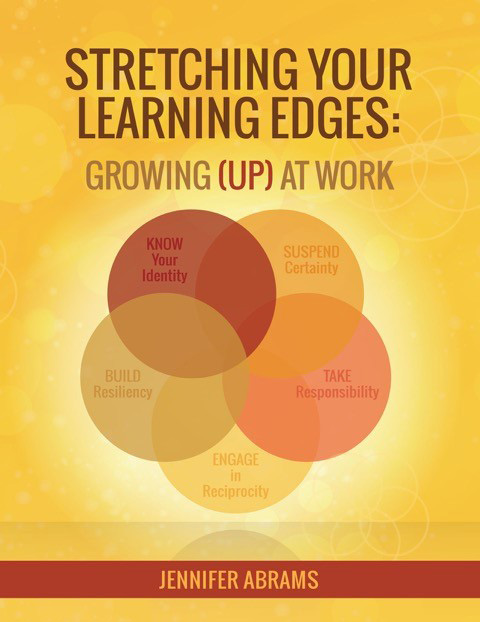
Max’s approach recognizes that inner development and our external efforts to create change in the world are inseparable. We cannot simply work on improving systems and organizations without examining who we are as the people working within them. It’s a both/and thing. As someone who wrote the book Stretching Your Learning Edges: Growing (Up) at Work, I found his work so validating (we speak the same language!) and quite uncomfortable. Max is a fellow ‘stretcher’ on the road of growth.
One of the first exercises in Max’s app invited me to write a personal leadership mission statement. A statement about who I want to be in the world.
I wrote a personal mission…
“My mission is to embody the compassion and boldness of a fierce crone and a caring auntie as I help others find their voice and transform K-12 education globally.”
At this stage of my life, I want to embody the wisdom, perspective, and unapologetic voice of a woman who has lived, learned, loved, lost, and yet continues to grow as she knows how essential this is for us all (old or young) to do – especially in the education field.
I want to be the person who tells you what you might need to hear, even when it isn’t comfortable, and who can sit beside you when things are hard. I want to help people find their voices, have the conversations they have been avoiding, and to bring you on the journey with me to create even healthier, professional, adult cultures of learning in schools. Yes, my mission is out there. But that isn’t the whole goal of the app. Hence, Max’s title of the app, Courageous Wholeness.
I was also asked to write a shadow mission statement. An acknowledgment of the person I can become when I am disconnected from my values, caught up in my insecurities and operating from fear and defensiveness. Kinda like who I am when at the end of the day, I am hypoglycemic and tired and I not my best self in an after school meeting (or when I am scrolling social media later at night and find myself either triggered or envious (or both). Not my best moments.
Here is My Shadow Mission:
“My shadow mission is to be a self-centered and comparative person, withholding my voice and my care, sharing my judgmental and sarcastic presence as I succumb to spiritual constipation and a narrow, jealous view of the world.”
Spiritual constipation. Yup. Eeesh. Not a flattering look or feeling. And not particularly unusual. I bet you recognize a version of yourself that emerges when you are tired, threatened, disappointed, or uncertain too. I know I am not alone. Don’t beat yourself up. We all have a side like this and it helps us all to become more conscious of when this shadow is influencing our behavior.
In Stretching Your Learning Edges: Growing (Up) at Work, I mention we need to work on our emotional hygiene so we don’t emotionally pollute our school or our meetings with this side of ourselves that surfaces when we aren’t as regulated as we’d like.
One of the ideas I appreciate most about the Center for Courageous Wholeness and the app is that it emphasizes daily workouts for my inner being and reminds me to build some muscle so I don’t ‘dust up’ my interactions with others. I need that reminder that the my “I” influences the “We.”
In schools, we often focus our professional learning on instructional strategies, curriculum, assessment, technology, and leadership practices. Yet, how much time do we devote to examining ourselves and our skills, mindsets and capacities of the adults doing this work?
- How do my insecurities influence my collaboration?
- How does my need to be right affect my willingness to listen?
- How does my desire for recognition shape the way I support colleagues?
- How do my unacknowledged fears influence the conversations I avoid?
I don’t believe everyone needs to share their shadow mission publicly. Vulnerability should never become another performance expectation. Yet, I do believe we can and should create environments where adults are encouraged to reflect on who they are becoming, not simply what they are accomplishing. Self-awareness is a professional responsibility.
I continue to work on becoming that fierce crone and caring auntie. But spiritual constipation, jealousy, and defensiveness make an appearance on many a day. If I can notice, give myself a little inside hug, and encourage myself to not bring that part of myself to my interactions, it’s a win for everyone.
Ask yourself:
- What does my shadow look like when I am stressed, tired, threatened, or feeling insecure?
- What habits, practices, or moments of reflection help me regulate my emotions so I don’t unintentionally pollute a meeting, conversation, or relationship with my frustration, defensiveness, or negativity?
- When I am triggered, how can I create a little space between what I feel and how I respond?
- How can I build my resilience muscles so that disappointment, criticism, comparison, or uncertainty don’t diminish my capacity to show up well for others?
- When I inevitably fall short of the person I aspire to be, how might I hold myself accountable without beating myself up?
Max knows that the shadow side of us will always be there. It’s the both/and part of life. His app just reminds us to not be in an either/or space but hold both so we make sure our shadow doesn’t make too many appearances in our interactions. I’m working on it. Join me.
Questions, comments, or suggestions? Feel free to email me at jennifer@jenniferabrams.com.
Cool Resources
The Science of Lesson Planning: High-Impact Practices That Deepen Student Learning by Lori Cohen. “Whether you’re a novice building foundational habits or a veteran ready to reimagine your practice, The Science of Lesson Planning serves as diagnostic tool, coaching guide, and planning playbook all in one. Unleash the power of intentional planning to center students and their needs and provide the transformative learning experiences they all deserve.”
Strategy Cards: Moving Teams and Organizations Forward by Joellen Killion, Susan Sparks and Deb Welch. “Strategy Cards provide 50 curated strategies for purposeful, mission-driven facilitation to lead change, elevate collaboration, and solve problems. Organized in 10 color-coded categories of processes from Building Community to Measuring Results, the cards equip leaders with field-tested strategies to address organizational challenges and ongoing team development.”