Do I Want to be Right or Effective?
July 1, 2026
A week ago someone wanted me to add some additional strategies to my Having Hard Conversations workshop. Her administrators had been feeling ineffective and rather frustrated in their supervision with a new teacher. This teacher had been given feedback and responded with what the administrators felt were overly intense feelings. How could an administrator continue to provide necessary feedback to her, and to others, if the teacher couldn’t self-regulate herself while hearing it?
This specific teacher had received what I imagine most of us would consider fairly routine feedback. Nothing harsh. Nothing personal. A suggested adjustment.
The response, however, was intense. Tears. Withdrawal. A strong sense of shame and failure.
Many of us might not understand this reaction. It feels ‘over the top.’ We start judging the reaction. We call this newer teacher a ‘snowflake’ or we speak about this new crop of teachers as ‘entitled and too emotional.’ As one veteran teacher said to me, “They just need to cowboy up or go sit in the truck.”
And yet, for some people, feedback doesn’t arrive as information. It arrives as threat.
The administrator introduced me to the term Rejection Sensitivity Dysphoria. (RSD). Look it up on Google. It isn’t (yet) in the DSM but as I spoke to more mentors and coaches about the term, they recognized it and it resonated as something they had seen. The idea that some individuals experience criticism, correction, or even supposedly neutral feedback, as far more painful than others dot.
Now, I can hear your response already….
“People need to toughen up.” “Suck it up.” “Pull up your big girl underpants and deal.”
Maybe. It would certainly help in this day and age of uncertainty, disorientation, struggle, and sadness to be able to manage discomfort more easily.
Yet, I have been asking myself a different question lately. One that my colleague, Edmundo Norte, asked of us over and over again.
Do I want to be right, or do I want to be effective?
If my goal is effectiveness, then judging someone’s reaction is much less useful than understanding it.
In my earlier years as a coach and consultant, and unfortunately when I am not feeling emotionally mature, I want to tell people to grow up and find some strategies (FAST) as one person’s emotional dysregulation is affecting us all, darn it.
Yet, when in a better space and filled with more compassion, I can get to better questions:
- What is happening in this person’s nervous system right now?
- Which SCARF domain is being triggered?
- What story is this person telling themselves about what this feedback means?
If I want to stay as a compassionate colleague and coach I should ask, “What skills have they not been taught?” “What skills have they not yet been able to master that will help them be more successful as they receive feedback?”
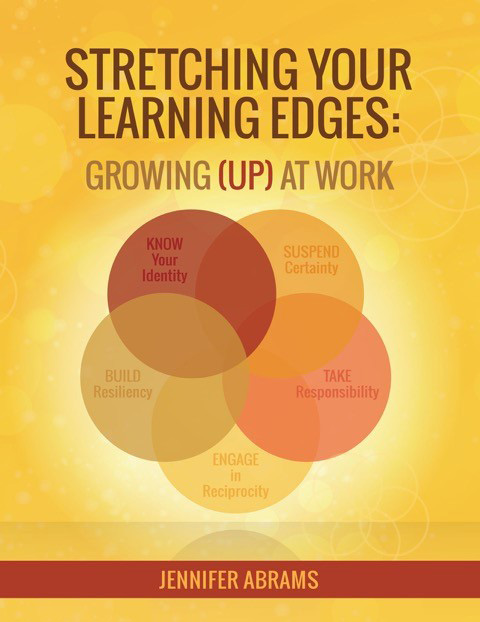
Here’s what I have come to believe and what I write about in Stretching Your Learning Edges: Growing (Up) at Work regarding the capacity to be even more resilient:
Receiving feedback well is not simply a personality trait that you either are born with or you are not.
It is a professional capacity.
And like any professional capacity, it can be developed.
Many educators have been extensively trained on how to give feedback. Far fewer have been taught how to receive it.
Do we explicitly teach:
- How to pause before reacting?
- How to separate identity from behavior?
- How to ask clarifying questions?
- How to tolerate discomfort without immediately defending, explaining, or withdrawing?
- How to stay curious when feeling criticized?
Those are learned skills. Not character traits.
Not evidence of strength or weakness.
Skills.
(Thanks for the Feedback by Stone and Heen is a good read for this specific work on feedback. The ‘Stretch’ work I have written about extends beyond receiving feedback into managing oneself through difficult moments, meetings, change initiatives, the gamut. And it’s all good work!)
Back to my point: our responsibility as givers of feedback is twofold.
First, we should continue to provide honest, humane and growth producing feedback.
Second, we should help people build the capacity to hear the feedback without experiencing it as a judgement on their worth as a person.
A feedback tolerance curriculum could look like:
- Normalizing feedback before it happens – Telling everyone we are creating a culture of growth here at this workplace. This means feedback will be given – to us all.
- Modeling our own experiences receiving feedback – We acknowledge feedback we receive in front of others and show how to respond to it with a nervous system that is emotionally regulated.
- Giving people language to use when they feel defensive, such as “I need to take a moment.” or “This feedback stings. Let me sit with it for a bit until I can really think about it with my whole brain.”
- Offering smaller, more frequent feedback to build up a bandwidth to receive it. Having opportunities to give and get feedback often; not just at evaluation time or when a crisis comes up.
- Reminding people that feeling uncomfortable does not automatically mean something is unsafe. Helping people to recognize the difference between those two feelings, as well as assisting others by modeling how to sit and breathe through discomfort.
We can never eliminate the sting and we can increase our tolerance of it.
One of the most important forms of professional maturity is learning to sit with the temporary discomfort of feedback long enough to discover what might be useful inside it. As I write in my book, we need to suspend our certainty that we are always right. Our way might be a way but it’s not always ‘the’ way. And oftentimes someone is at least 10% right. We need to be able to sit with that.
Questions to Ask Yourself
- How do I typically respond internally when I receive feedback?
- Do I experience feedback as information, judgment, threat, or opportunity?
- When was the last time I modeled receiving feedback in front of others?
- What assumptions do I make about people who struggle to hear feedback?
- Where might understanding be more productive than judgment?
- How am I helping others build feedback tolerance?
- What would change if I focused less on being right about how wrong someone’s reaction is and focused more on being effective in helping them grow?
- Finally…what is one piece of feedback I am still resisting that might have something to teach me?
Join me in moving from being right to being effective. It’s a better place to land.
Questions, comments, or suggestions? Feel free to email me at jennifer@jenniferabrams.com.
Cool Resources
A good organization and two newsletters that can help us with our development.
Tru Fit Talent “We evaluate how candidates actually think, decide, and communicate in role-relevant simulations. This reveals performance potential grounded in observable behavior — not just credentials or interview polish. The best predictor of job performance is performance on that same job.”
Piloting Faith by Rev. Cameron Trimble “This (almost) daily email boosts your spirit, inspires your activism and challenges your complacency.”
Subtle Maneuvers “Subtle Maneuvers is a twice-monthly newsletter on the creative process, with lessons and insights from novelists, painters, poets, filmmakers, and musicians. From the author of Daily Rituals: How Artists Work.”