Just Say Yes
January 5, 2026
Adulting. No fun. This past month I did a bone density scan, rewrote my trust, had my carpets cleaned, started (again) eating more healthfully, and tried to empty my inbox more consistently. It felt good to stand tall, be a grown up, and do what was responsible and good for me and others.
And yet, there is so much more to adulting than checking off a to do list, getting rid of clutter, writing thank you notes, and flossing. It is also about building your inner muscles to manage uncertainty and fear. It’s about gaining perspective, getting outside yourself, and being more empathic and understanding. It’s about not tolerating yourself when you just settle for being a bit more immature than you know is right.
This year is another year to work on myself (work in progress!) and help others grow up and to do it in public – in front of one’s team, one’s school, one’s organization. Peter Block, one of my cognitive crushes, wrote a book called The Answer to How is Yes: Acting on What Matters. In the text he speaks of not worrying so immediately about the techniques needed to make something happen, growing anxious about the next right steps in the process, or being too focused on the anticipated resistance or the pushback. He asks his readers to consider a much deeper and important part to moving forward. He asks us to decide what we won’t tolerate anymore and asks us to determine what we can’t not address and then do something about it. When and where do we just need to say ‘yes,’ move forward, and, in the process, just figure out our next best step? No worrying about strategy. Real change is moral, not technical.
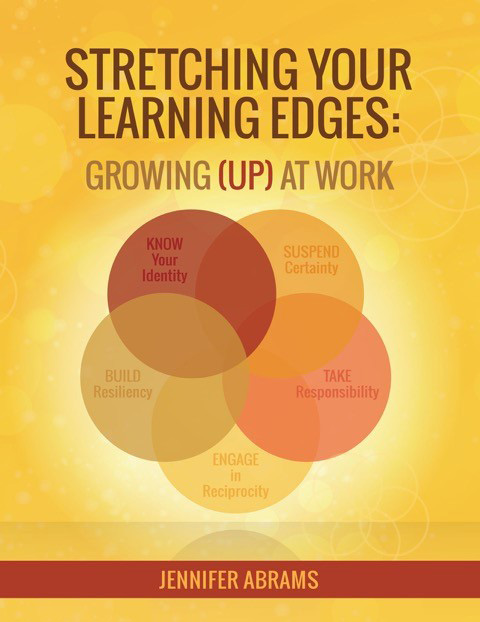
I spend a lot of time working with folks who ask, “What if?” What if they say this in response to my comment? Where might I manage this process so I have fewer speed bumps along the way? Where are others getting stuck and how can I pre-empt those obstacles? I don’t disagree that these are good questions to ask. I have written a book or two on these topics. But again, Block says commitment precedes technique.
We gotta just say, “Yes.” We will be moving forward. This action is the next right thing to do. We will feel discomfort. We might feel stomach upset. We most likely will engage with others who disagree with our words or actions. Others will shut down. We will be met with indifference. And? The question isn’t “Will there be challenges?” The question is, “What do I need to do or say no matter the outcome?”
This month, thanks to Peter, I will be asking myself with great intention…
- What do I care about?
- What am I willing to commit to?
- What am I willing to risk?
- What price am I willing to pay to contribute to the world I want to live in?
- What will I not collude with anymore?
Join me. Questions, comments, or suggestions? Feel free to email me at jennifer@jenniferabrams.com.
Cool Resources
Hospicing Modernity: Facing Humanity’s Wrongs and the Implications for Social Activism by Vanessa Machado de Oliveira. “Hospicing Modernity: Facing Humanity’s Wrongs and the Implications for Social Activism by Vanessa Machado de Oliveira is a book that challenges readers to confront the destructive patterns of modernity, such as colonialism, consumerism, and extractivism, with maturity and accountability, rather than seeking easy solutions. It argues for a process of “hospicing” modernity—a gradual, compassionate ending—by examining our complicity, unlearning harmful habits, and developing new ways of being that foster ecological and social responsibility, moving beyond desperate hope or hopelessness.”
The Work That Reconnects Network “The Work That Reconnects is meant for anyone who longs to serve the healing of our world in a more powerful and effective way. This interactive group process was developed by Joanna Macy, in cooperation with many colleagues, over several decades. The Work That Reconnects draws on foundational teachings, including Systems Thinking, Deep Ecology and Deep Time, Spiritual Traditions and Undoing Oppression.”
The International Bateson Institute “The International Bateson Institute exists to generate and give access to information that offers a wider vision. The focus of inquiry is on the interrelational processes between and among systems. It can involve recognizing how patterns repeat and reflect each other among multiple contexts and across multiple systems – many of these systems’ maintenance and renewal is critical in the coming decades.”